iBook was right there, Apple. C’mon, man!
Apple did a thing earlier this week.
I’ve been a Mac user at home since 2006, and I’ve used Macs since 1994. I’ve seen Apple at its highest, I’ve seen it at its lowest, and I’ve seen Apple at its creative and technical peaks (which, for the record, did not coincide).
- Apple at its highest: Purveyor of iPhone, iPad, and AirPods with an incidental computer business, 2016 onward. (“Hey, kids, did you know that the company that makes your iPad and iPhone also makes computers?”)
- At its lowest: The confused mess that was Apple in 1996 at the nadir of its beleaguered era.
- At its creative peak: The company that brought us the Power Mac G4 Cube, iMac G4, iMac G3, iBook G3, and original iPod (1998 to about 2002). The fun, cheeky, unrelentingly innovative computer company.
- At its technical peak: The company that brought us a series of the most refined Unix operating systems to ever hit the consumer desktop (Mac OS X between Leopard (2007) and Mavericks (2013)), and the most refined hardware generally available to consumers to run them on (early Intel Macs). A computer company with an incidental side line in other consumer electronics.
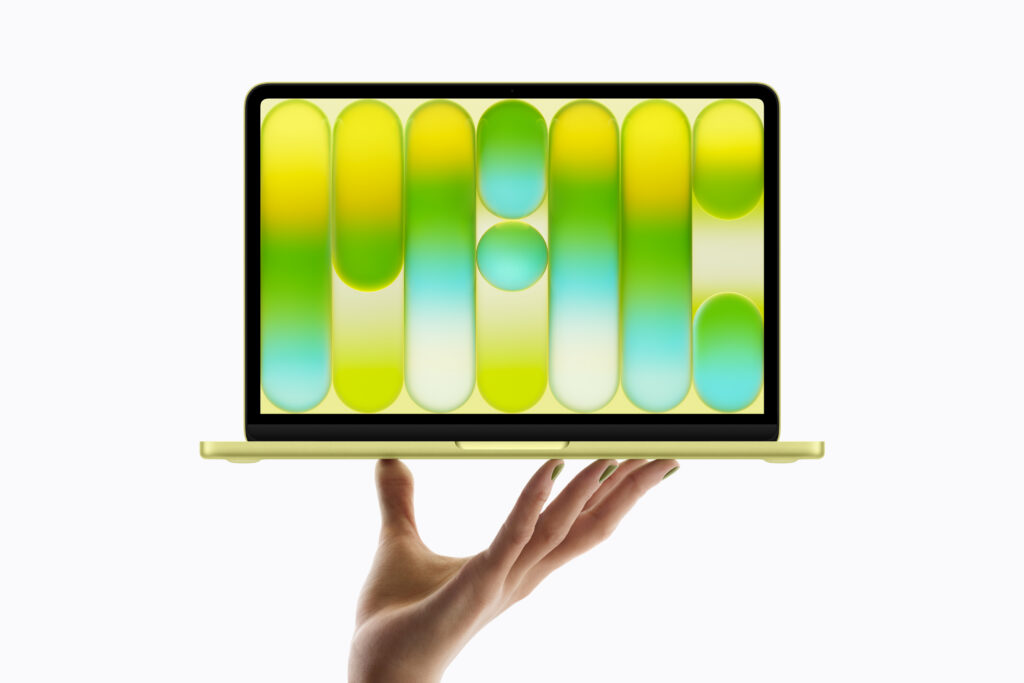
That’s why I’m struggling to figure out where the MacBook Neo fits in. It’s not the product of a company at its creative peak: it’s a stripped-back, trimmed-down collection of parts stuffed into an old MacBook Air chassis1 and painted pretty colors for impressionable children (since I get the feeling that younger users will largely be the target market). It’s not the product of a company at its technical peak either: the M2 processor (released in 2021 for the Mac line) outperformed the A18 Pro (released in 2024 for the iPhone 16 Pro) before the A18 Pro was even a thing. Likewise, even my phone (iPhone 17 Pro Max) has more RAM (12 GB to the Neo’s 8). The MacBook Air I’m using right now has 10 processor cores versus the Neo’s 6. I would be curious to know how the single-thread performance compares against my M4 Macs.
Which raises the question of who the MacBook Neo is even for. Even the baseline M4 MacBook Air, which I’m using to write this post, comes with 16 GB of RAM and believe me when I say that macOS Tahoe absolutely needs 16 GB of RAM at minimum to stretch its legs and cache things appropriately. I get the feeling that the MacBook Neo will swap a lot of things to its internal SSD, which will shorten the SSD’s life unduly and make the system feel less than responsive. It won’t be as bad as my first MacBook back in 2006, which came with a paltry 512 MB of RAM (0.5 GB for those of you playing at home), and that system was horrible to use until I upgraded it to 2 GB of RAM.
Two gigabytes of RAM was enough to get me through four years of OS upgrades back then. Nowadays, 8 GB in a non-upgradable computer probably has a very short half-life. When macOS 29 comes out, don’t act surprised if half of its features are withheld from you because they require more than the A18 Pro or its memory complement can provide. At $600, Apple probably expects you to upgrade your Neo annually or biennially the way people upgrade their other mobile devices. That seems to be a point that a lot of people are conveniently ignoring in all the hype I’ve seen for the MacBook Neo.
Now because I am a moron, I will probably acquire a Neo at some point. I qualify for education pricing since I’m enrolled at a university, and that lowers the already low price to just $500. That’s a price I’m almost willing to pay to have a second laptop kicking around XC headquarters with a French Canadian keyboard layout and the OS in French (because a dedicated French-language writing machine is something I have always wanted).
Oh, wait, I neglected to mention the price, which is arguably the Neo’s best feature.
For regular purchasers, the baseline MacBook Neo, with these specs, is just \$600 in the US (and education purchasers can enjoy a $100 discount):
- A18 Pro processor
- 8 GB RAM
- 256 GB SSD
- The same 20 W power supply as your iPad
- Only one USB 3 port (no, not USB 4 – no Thunderbolt for you, peasant) — the other port is USB 22
- Available colors: silver, dark blue (“indigo”), pink (“blush”), and piss-yellow (“citrus”)
If this looks to you like an iPad with a keyboard duct-taped to it, with iBoot set to start macOS instead of iPadOS, then congratulations, you’ve figured out Apple’s angle on the MacBook Neo.
For more money, you can add more storage and equip the computer with Touch ID. That’s right, dear reader: the MacBook Neo does not come with Touch ID in its base configuration. One of Apple’s smartest and most sophisticated features doesn’t come in its cheapest laptop. Likewise, the MacBook Neo lacks MagSafe, which has been a marquee feature of Apple laptops for twenty years3. If you want to welcome users to the platform, this isn’t how you go about it. Likewise, as someone who cheaped out and got the 256 GB MacBook Air the last time I went laptop shopping, let me tell you: the 512 GB storage on my Mac mini feels positively palatial by comparison.
And, as I said before, macOS Tahoe is going to perform like absolute dogwater with just 8 GB of RAM onboard. If all you’re going to do is run Safari and the newly ruined version of Pages, with swathes of functionality unavailable to you unless you subscribe to Apple Creator Studio, this may not be a huge deal to you. Likewise, if all you’re going to do is run Terminal and BBEdit, the Neo might be a surprisingly good deal – but if you’re strapped for cash, need a new computer, and prefer a Mac, I’d sooner recommend that you go buy an M1 or M2 MacBook Air (or Pro) secondhand. You’ll get a significantly better laptop for your money and one that probably has more memory and storage onboard.4 If you need to run Excel for big spreadsheets, Xcode for software development, LM Studio for on-device LLMs, or you’re like me and run Safari windows with dozens of tabs open, 8 GB of RAM is going to feel very constraining very quickly, and I get the feeling that the single-core performance of the A18 Pro SoC is going to feel equally as constraining under demanding tasks like LaTeX compilation and Clang performance if you’re compiling Objective-C, Swift, C, or C++.
I know the market segment Apple is aiming toward with this machine: the education market. This is basically a Mac laptop for kids, and if I were a teenager today (perish the thought), I would probably think the silver one was the neatest thing since sliced bread.
I was skeptical about the Mac mini in 2006 when I first learned about it. Apple has always positioned the Mac mini as its cheapest desktop computer, and I questioned the wisdom of having a desktop computer with fewer features than my laptop. I now own three Mac minis of various vintages (2006, 2010, and 2024) and depend on the newest one as my main Internet-enabled desktop computer. (My M4 Pro mini is near the top of the range but not quite there.) Likewise, I was skeptical about the MacBook Air when it launched in 20085, the 2015 MacBook when it was released, and now the MacBook Neo in 2026. Maybe Apple will take this line to places that I can’t imagine right now, as it did with the MacBook Air and Mac mini. Maybe it will languish like the 2015 MacBook did and die off in relative obscurity. Only time will tell.
One closing thought: if the MacBook Neo is the machine that makes the Mac platform even somewhat close to mainstream, then I will have even more ire to direct at it. Macs are supposed to be niche. They’re supposed to be something that only a select few buy into. I don’t want more people in the Mac community. I don’t think the Mac community will benefit from having more users in its ranks. And an intentionally hobbled product that withholds some of the best features of the Mac platform from its users will, I expect, backfire majestically on the company selling it. As a result, I won’t act shocked if the MacBook Neo ultimately harms the Mac platform.
At the risk of repeating myself: MacBook Neo will introduce new users to the Mac platform, users that it does not need. I don’t want Macs becoming mainstream. I don’t want Macs losing their exclusivity. Owning a Mac is a status symbol. It says something about the owner. Apple has, in its wisdom, decided that it’s more important to make the Mac accessible more broadly than to make it better for those already invested in the platform. I know which Apple I prefer.
Postscript: I do find it interesting that Apple is launching its “MacBook for the people” in the same year that the company is celebrating its fiftieth anniversary. Apple’s original ethos was that it was making the personal computer for the masses, which in 1977 gave us the Apple II and in 1984 gave us Macintosh. Macs have now been around for longer than I have, and Apple milked the Apple II line until 1992 when the Apple IIgs was finally discontinued.
- The Neo is billed as only weighing 2.7 pounds. My M4 MacBook Air only weighs 2.7 pounds. ↩︎
- No, I’m not making this shit up. The MacBook Neo has a USB 2.0 port. In 2026. ↩︎
- No, really, Apple commissioned a TV ad to publicize the MagSafe connector, one of the many “Get a Mac” ads featuring John Hodgman (“PC”) and Justin Long (“Mac”). ↩︎
- You’ll also get a laptop with Asahi Linux support, which should offer you a very compelling Linux on ARM experience should the desire arise. It has to be better than Ubuntu on my ThinkPad X13s. ↩︎
- I’m now on my fourth MacBook Air. You tell me how well that turned out. ↩︎